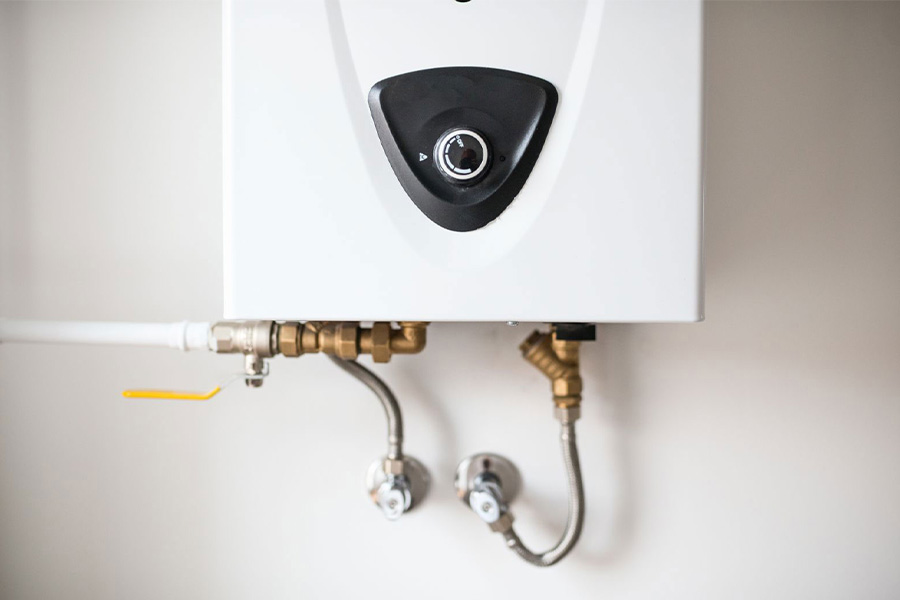
Tankless water heater repair in Coweta, OK is usually needed when a unit produces no hot water, the temperature fluctuates during use, scale coats the heat exchanger, ignition fails, water pressure drops, or the system throws an error code and shuts down. Each of these points to a specific component, which is why catching the right one early keeps a minor repair from turning into a full replacement.
Tankless water heaters have earned their reputation in Coweta homes. They are energy efficient, take up far less space than a tank unit, and when working properly, deliver hot water on demand without the wait. But like any appliance working hard every day, they run into problems over time. Working in homes across Coweta, from the newer builds near Coweta City Park to older properties along Peaceful Valley Road, our technicians see the same six issues account for the vast majority of tankless service calls. Knowing what they look like helps you get a tankless water heater repair in Coweta scheduled before a minor issue compounds into something more expensive.
1. No Hot Water at All
This is the most obvious sign that something is wrong, and it is also one of the most frustrating. You turn on the tap, wait, and nothing but cold water comes through.
With a tankless unit, this can stem from several different causes. A gas supply issue, a failed igniter, a tripped error code, a blocked exhaust vent, or a problem with the flow sensor can all result in the unit failing to fire. Electric units may have a tripped breaker or a failed heating element instead.
Before assuming the worst, check whether the unit is displaying an error code. Most modern tankless water heaters have diagnostic displays that point toward the specific issue. Regardless of what the code says, a licensed plumber should be the one to diagnose and fix the underlying cause. Guessing your way through a gas-powered appliance is not worth the risk.
2. Fluctuating Water Temperature
Hot, then cold, then hot again. If your water temperature is inconsistent during a shower or while running a faucet, your tankless unit is struggling to keep up or regulate properly.
This is sometimes called the cold water sandwich effect, where a brief burst of cold water interrupts an otherwise hot stream. It can happen when the unit does not fully register a new demand for hot water, especially when flow stops and restarts within a short period.
Beyond that quirk, true temperature fluctuation during continuous use often points to a dirty or failing flow sensor, a problem with the mixing valve, or mineral scale buildup on the heat exchanger. In Coweta, where water hardness can contribute to faster mineral accumulation, scale is a common culprit worth checking early.
3. Mineral Scale Buildup on the Heat Exchanger
Hard water leaves mineral deposits wherever it flows, and the heat exchanger inside a tankless unit is no exception. Over time, calcium and magnesium deposits accumulate on the exchanger’s surface, reducing its ability to transfer heat efficiently and forcing the unit to work harder to reach the target temperature.
Left unaddressed, scale buildup can cause the unit to overheat, trigger error codes, shorten its lifespan, and eventually result in heat exchanger failure, which is one of the more expensive repairs on a tankless system.
Flushing the unit with a descaling solution on a regular maintenance schedule is the standard way to prevent this. If your household already deals with the effects of hard water elsewhere in the home, pairing tankless maintenance with water softener installation addresses the source of the buildup rather than just the symptom on this one appliance.
4. Ignition or Flame Failure
Gas-powered tankless water heaters rely on consistent ignition to fire up the moment hot water is demanded. If the igniter fails or the flame does not stay lit, the unit will not produce hot water and typically displays an ignition-related error code.
Ignition problems can be caused by a disrupted gas supply, a dirty or faulty igniter, issues with the venting system, or a problem with the gas valve itself. Some of these are straightforward fixes, and others are more involved, but all of them require a licensed professional to properly diagnose and repair.
Do not attempt to inspect or adjust any gas-related components on your water heater yourself. If you suspect an ignition or gas supply issue, shut the unit off and call for gas line repair from a plumber qualified to work on gas appliances.
5. Low Water Pressure From the Unit
If your hot water pressure has dropped noticeably while cold water pressure seems fine, the tankless unit itself is likely the source of the restriction. A clogged inlet filter is one of the most common and easily overlooked causes of this problem.
Tankless units have an inlet screen filter designed to catch sediment before it reaches the internal components. Over time, that filter collects enough debris to restrict water flow significantly. Cleaning or replacing it is a straightforward maintenance task that can restore pressure quickly.
If cleaning the filter does not resolve the issue, the problem may run deeper, including scale narrowing internal passages, a failing flow sensor, or a partially closed service valve. Low pressure that persists after basic filter maintenance is worth having a plumber look at before it affects other fixtures throughout the home. For homes where sediment is an ongoing issue, pairing water heater maintenance with a whole-home water filtration installation can reduce how often this problem returns by addressing the source before it ever reaches the unit.
6. Error Codes and System Shutdowns
Modern tankless water heaters are designed to protect themselves. When something goes wrong internally, the unit triggers an error code and may shut down entirely rather than continue operating in a compromised state. This is actually a useful feature, since it prevents a minor issue from becoming major damage.
Common error codes point to overheating, venting problems, flow sensor failures, ignition issues, and exhaust blockages. The specific code displayed corresponds to a particular component or system, and that information is valuable to a plumber because it helps narrow down the diagnosis quickly.
What you should not do is repeatedly reset the unit and ignore the code. If the same error keeps returning, the underlying issue has not been resolved, and repeated shutdowns put stress on the system that can wear on components that were otherwise fine. If your unit is throwing codes you do not recognize or shutting down regularly, it is time to schedule a repair call.
How Often Should a Tankless Water Heater Be Serviced in Coweta, OK
Tankless water heaters are built to last, often twenty years or more with proper care, but that lifespan depends on regular maintenance rather than waiting for a complete failure. Annual flushing, filter cleaning, and a periodic inspection go a long way toward keeping a unit running efficiently year after year.
Based on what we see in Coweta properties, homes with harder water generally need more frequent flushing than the standard annual schedule, since mineral scale accumulates faster once hardness levels climb. A technician can recommend a realistic interval for your specific water conditions rather than a generic timeline that does not account for what is actually running through your pipes.

Frequently Asked Questions
How long do tankless water heaters typically last
With regular maintenance, tankless units often last twenty years or more, well beyond the typical lifespan of a traditional tank water heater. Skipping annual flushing and filter cleaning tends to shorten that lifespan considerably, especially in homes with harder water.
What does an error code on my tankless water heater mean
Error codes correspond to a specific component or condition, such as overheating, a venting issue, or an ignition failure. The exact code displayed helps a technician narrow down the cause quickly, so it is worth noting or photographing the code before calling for service.
Can I flush my own tankless water heater
Flushing involves isolating the unit and circulating a descaling solution through the heat exchanger, which requires specific valves and equipment most homeowners do not have on hand. A professional flush also includes an inspection that can catch developing issues you would not notice otherwise.
Why does my tankless water heater have a delay before hot water arrives
A brief delay is normal, since the unit has to detect flow and ignite before heating begins. A delay that has grown noticeably longer than usual often points to a flow sensor issue or scale buildup slowing the unit’s response time.
Is a tankless water heater repair usually cheaper than replacement
Most single-component issues, like a failed igniter, dirty flow sensor, or clogged inlet filter, are repaired for a fraction of replacement cost. Repeated major failures or a compromised heat exchanger are the situations where replacement starts to make more financial sense.
Does hard water really affect tankless water heaters that much
Yes. Because a tankless unit heats water on demand through a compact heat exchanger, even moderate scale buildup reduces efficiency and can trigger overheating faster than in a traditional tank. Homes with noticeably hard water benefit from more frequent flushing to stay ahead of it.
Staying Ahead of Tankless Repairs in Coweta
A small repair today is almost always a better outcome than an emergency call or a full replacement down the road. If any of the six issues above sound familiar, it is worth having a professional take a look sooner rather than later.
Superior Plumbing, Drain Cleaning & Water Heater Repair helps Coweta homeowners get the most out of their tankless water heaters. Whether you are dealing with a specific issue or are simply overdue for maintenance, we will give you an honest assessment and get things back to working order. Schedule your tankless water heater service today and keep hot water running reliably through every season.