Your sewer line is one of the hardest-working parts of your home’s plumbing system, and it does its job almost entirely out of sight. That’s what makes damage so easy to miss in the early stages. By the time most homeowners realize something is wrong, the problem has often been developing for months.
The good news is that sewer pipe damage rarely happens all at once. There are almost always early symptoms, and catching them before things escalate can mean the difference between a manageable repair and a major excavation project. If you live in Jenks, OK, here’s what to watch for.
Slow Drains Throughout the House
A single slow drain is usually a localized clog. That’s a minor issue. But when multiple drains throughout your home are slow at the same time, that’s a different story entirely.
When your kitchen sink, bathroom sink, shower, and tub are all draining sluggishly, the problem is likely not in any individual drain line. It points to a restriction or partial blockage somewhere in the main sewer line that all of those fixtures share. The further downstream the problem is, the more fixtures it affects.
This is one of the earliest and most overlooked signs of sewer pipe damage. It’s easy to chalk it up to buildup in individual drains, but if basic drain cleaning doesn’t resolve the issue across the board, the main sewer line deserves a closer look.
Gurgling Sounds From Drains or Toilets
Pay attention to what you hear when water drains. Gurgling or bubbling sounds coming from a drain, toilet, or floor drain after water flows elsewhere in the house is a sign that air is trapped somewhere it shouldn’t be.
Normally, your plumbing system is designed to vent air properly through vent pipes that run up through the roof. When something is blocking or partially obstructing the sewer line, air gets displaced and pushed back up through the nearest drain opening. That movement of air through standing water is what creates the gurgling sound.
If you flush the toilet and hear gurgling from the shower drain, or run the washing machine and hear bubbling from a floor drain, those are signals worth taking seriously. Left alone, the underlying cause tends to worsen over time.
Sewage Odors Inside or Around Your Home
A properly functioning sewer line is sealed. You should never smell sewage inside your home or notice a persistent foul odor near drains, in your yard, or around your foundation. If you do, something in the system has failed.
Cracks, separations, or deteriorating joints in the sewer line allow sewer gas to escape into the surrounding soil and, in some cases, back into the home. Sewer gas contains hydrogen sulfide, which carries that distinctive rotten egg smell, along with other compounds that are unpleasant at minimum and potentially harmful with prolonged exposure.
An odor that comes and goes near a specific drain might be a dry P-trap, which is easy to resolve. But a persistent or widespread sewage smell that doesn’t go away after running water down the drain points to something more serious in the line itself.
Wet Spots or Unusually Green Patches in Your Yard
Your sewer line runs underground from your home out to the municipal connection at the street. When that line develops a crack or a joint fails, wastewater escapes into the surrounding soil.
The result above ground is often a wet, soggy, or spongy area in your yard, even when it hasn’t rained recently. In some cases, the opposite effect occurs. The escaping wastewater acts as a fertilizer, causing a specific strip or patch of grass to grow noticeably thicker and greener than everything around it.
In Jenks, OK, where many neighborhoods have established lawns with mature landscaping, this kind of localized change in your yard can be subtle but is worth paying attention to. If the pattern follows the path your sewer line runs, that connection is not a coincidence.
Frequent or Recurring Drain Backups
One drain backup can happen for any number of reasons. When backups keep occurring in the same location, or when multiple fixtures back up at the same time, that frequency is the real warning sign.
Recurring backups suggest that whatever is causing the problem is not being fully resolved. Tree root intrusion is one of the most common causes in Jenks, OK, where mature trees throughout residential neighborhoods send roots searching for moisture. Roots infiltrate sewer lines through joints and small cracks, growing inside the pipe and creating a net that catches debris and causes repeated blockages.
Other causes include pipe deterioration, grease accumulation, or a bellied section of pipe where the line has sagged and allows solids to collect. Regardless of the cause, recurring backups are a clear signal that a camera inspection and likely sewer pipe repair are needed to address what’s actually happening inside the line.
Cracks in Your Foundation or Shifting Floors
This symptom tends to show up later in the progression of sewer line damage, but it’s worth including because homeowners often don’t connect it to plumbing. A sewer line leak beneath or near a foundation can gradually erode the soil that supports the structure above it.
As that soil washes away or becomes saturated, the foundation loses support unevenly, which can lead to settling, cracking, and, in more serious cases, structural shifting. If you’re noticing new cracks in your foundation, interior walls, or flooring alongside any of the other symptoms on this list, have both your foundation and your plumbing inspected. The plumbing may be what’s driving the structural issue.
What to Do When You Notice These Signs
Noticing one of these symptoms doesn’t automatically mean your sewer line is in serious trouble. But it does mean the system needs to be evaluated. The only way to know what’s actually happening inside a sewer line is a camera inspection, which allows a plumber to see the condition of the pipe, identify the location and nature of the problem, and recommend the appropriate course of action.
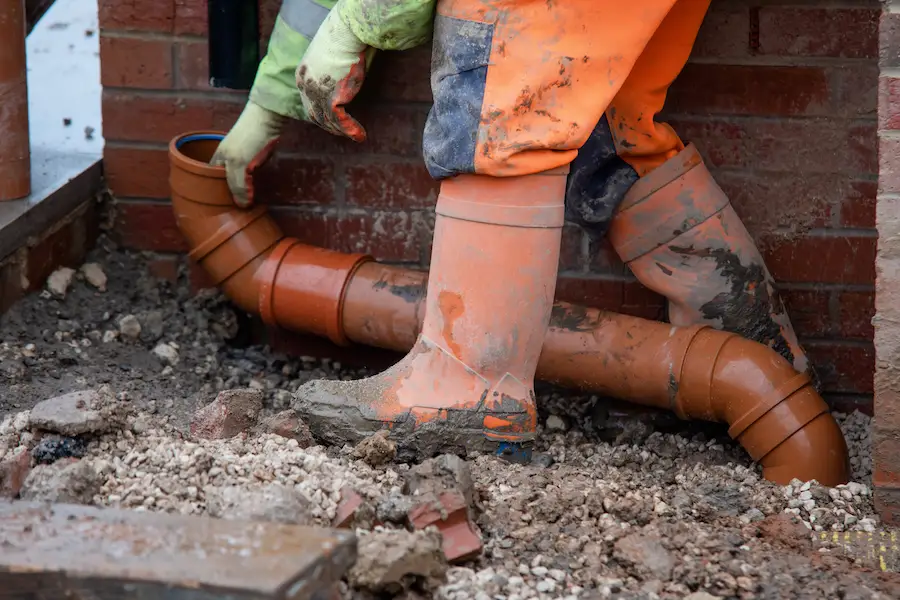
Some issues, like early-stage root intrusion or a minor crack, can be addressed with targeted repairs. Others, particularly in older Jenks homes with aging clay or cast iron lines, may indicate that sewer pipe replacement is the more practical long-term solution.
The important thing is not to wait. Sewer line problems do not resolve on their own. Every week of delay allows the damage to progress and the repair to become more involved.

Protect Your Jenks Home Before It Becomes an Emergency
Sewer line problems have a way of staying hidden until they become impossible to ignore. By then, the cost, the disruption, and the damage are all significantly greater than they would have been if the issue had been caught early.
Staying alert to these early symptoms and acting on them promptly is one of the most practical things a Jenks homeowner can do to protect their property and avoid an unexpected plumbing emergency.
Superior Plumbing helps homeowners throughout Jenks identify and resolve sewer line issues before they spiral. If you’ve noticed any of these warning signs, don’t wait for the situation to get worse. Call us or book an inspection online today.